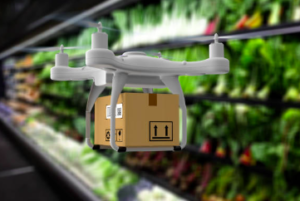
In an era where sustainability and efficiency are paramount, augmented reality (AR) is emerging as a revolutionary tool in the fight against food waste. This advanced technology is proving to be a game-changer in various sectors, and its applications in the food supply chain are particularly promising. By leveraging augmented reality, food companies can significantly enhance their operations, leading to substantial reductions in food waste.
Understanding Augmented Reality and Its Role
Augmented reality (AR) overlays digital information onto the physical world, enhancing our perception of reality. This technology is not just for entertainment or gaming; it has practical applications across numerous industries, including the food industry. AR can provide real-time data and insights, making it a powerful tool for food waste reduction strategies.

Practical Applications of Augmented Reality in the Food Industry
One of the most significant challenges in the food supply chain is managing inventory efficiently. Augmented reality applications can help food companies monitor stock levels in real-time, ensuring that products are used before they expire. For instance, AR glasses can be used by warehouse workers to quickly locate and identify items that are nearing their expiration dates, facilitating timely usage or redistribution.
Moreover, AR can enhance the accuracy of order picking in warehouses. By using augmented reality technology, employees can receive visual cues and directions, reducing errors and ensuring that the right products are picked and shipped. This accuracy helps minimize the occurrence of spoilage due to incorrect orders, thus contributing to food waste reduction.
Realifood AR Solutions: Innovating Food Waste Reduction
A prime example of innovation in food waste reduction is Realifood AR Solutions. This company has developed a suite of augmented reality solutions specifically designed for the food industry. Their technology enables detailed tracking and management of food products throughout the supply chain. By providing precise data on product conditions, shelf life, and optimal storage practices, Realifood AR Solutions helps companies make informed decisions to minimize waste.
For instance, Realifood’s AR applications can alert managers to temperature fluctuations in storage areas, allowing for immediate corrective actions to prevent spoilage. Additionally, their AR systems can simulate various storage scenarios to identify the best conditions for different types of food, further enhancing sustainability efforts.
Augmented Reality and Food Supply Chain Sustainability
Sustainability is a critical concern in the food industry, and augmented reality is playing a pivotal role in promoting food sustainability. By optimizing the supply chain, AR helps reduce the environmental impact of food production and distribution. For example, AR can assist in optimizing delivery routes, reducing fuel consumption, and minimizing the carbon footprint of food transportation.
Furthermore, augmented reality technology can facilitate better communication and collaboration among different stakeholders in the supply chain. By providing a shared, real-time view of inventory levels, transportation status, and storage conditions, AR ensures that all parties are aligned in their efforts to reduce food waste.

Augmented Reality for Food Companies: A Strategic Investment
Investing in augmented reality solutions can yield significant benefits for food companies. The initial costs of implementing AR technology are offset by the savings generated through reduced waste and improved efficiency. Companies that adopt AR are better equipped to meet regulatory requirements and consumer expectations for sustainability.
In addition, AR technology can enhance the overall quality of food products. By ensuring that food is stored and transported under optimal conditions, augmented reality helps maintain the freshness and safety of products, leading to higher customer satisfaction and reduced returns due to spoilage.
Conclusion:
Augmented reality is proving to be a secret weapon in the battle against food waste. Its ability to provide real-time, actionable data makes it an invaluable tool for food companies looking to enhance their supply chain operations. From improving inventory management to optimizing storage conditions, the practical applications of augmented reality in the food industry are vast and varied.
As the technology continues to evolve, we can expect even more innovative solutions to emerge, further reducing food waste and promoting sustainability. For food companies committed to making a positive impact, investing in augmented reality technology is not just a strategic move but a necessary step towards a more sustainable future.