
Augmented Reality (AR) is transforming various sectors, and the food industry is no exception. This cutting-edge technology is not only enhancing consumer experiences but also addressing critical issues like food waste. With the global food supply chain facing significant challenges, integrating augmented reality applications offers promising solutions for waste reduction and sustainability.
The Growing Problem of Food Waste
Food waste is a pressing global issue. According to the Food and Agriculture Organization (FAO), approximately one-third of all food produced for human consumption is wasted each year. This amounts to about 1.3 billion tons, which has severe environmental, economic, and social impacts. The food industry, from production to consumption, plays a pivotal role in addressing this crisis. Innovative technologies like augmented reality (AR) are emerging as viable solutions to tackle this problem effectively.

How Augmented Reality Technology Works
Augmented reality technology overlays digital information onto the physical world, enhancing the user’s perception of their environment. In the food industry, AR can be used in various ways to improve efficiency, educate consumers, and ultimately reduce waste. By leveraging AR, companies can provide real-time information, interactive experiences, and practical applications that drive more sustainable practices.
Practical Applications of Augmented Reality in the Food Industry
1. Enhanced Consumer Education:
Augmented reality applications can educate consumers about the origins, nutritional content, and proper storage of food products. By scanning a product with an AR-enabled device, users can access detailed information about its journey from farm to table. This increased awareness helps consumers make informed decisions and reduces the likelihood of food spoilage.
2. Smart Packaging Solutions:
AR technology can be integrated into food packaging to provide dynamic and interactive content. For instance, Realifood AR Solutions offers innovative packaging that changes based on the product’s shelf life. As the expiration date approaches, the packaging can alert consumers, suggest recipes, or even provide storage tips to extend the product’s usability. This smart approach helps in reducing food waste significantly.
3. Inventory Management and Supply Chain Optimization:
For food companies, managing inventory efficiently is crucial to minimizing waste. Augmented reality solutions can streamline inventory management by providing real-time data on stock levels, expiration dates, and storage conditions. This ensures that products are rotated properly, and excess inventory is identified before it becomes waste. Additionally, AR can enhance the visibility and traceability of the food supply chain, making it easier to identify and address inefficiencies.
4. Interactive Cooking and Meal Planning:
AR can revolutionize the way consumers plan meals and cook. By using AR apps, users can visualize recipes, see portion sizes, and receive step-by-step cooking instructions. This not only makes cooking more engaging but also helps in using up ingredients before they go bad. Such interactive solutions encourage better meal planning and reduce the amount of food that ends up in the trash.
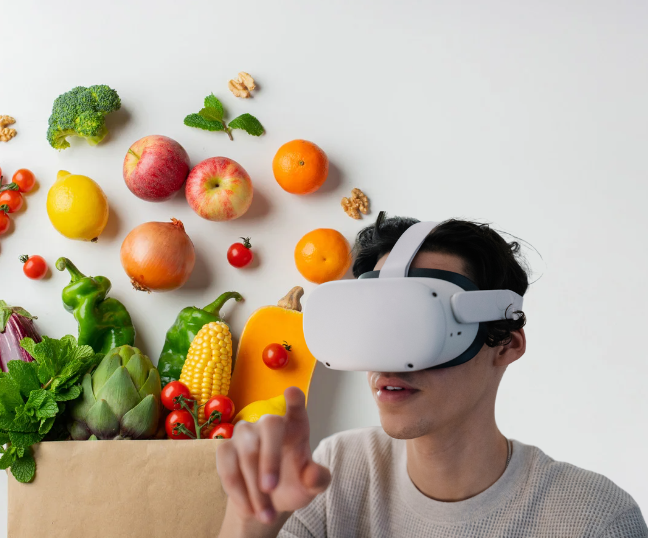
Innovation in Food Waste Reduction
The implementation of augmented reality in the food industry represents a significant step forward in innovation and sustainability. By harnessing AR, companies can develop new strategies for food waste reduction. These strategies include optimizing supply chains, improving consumer engagement, and creating more efficient inventory systems. As a result, AR technology not only enhances the consumer experience but also contributes to a more sustainable food system.
Case Study: Realifood AR Solutions
Realifood AR Solutions is at the forefront of using augmented reality to combat food waste. Their approach involves integrating AR into various aspects of the food supply chain, from production to retail. By providing real-time information and interactive content, Realifood helps both businesses and consumers make more informed decisions, leading to significant reductions in food waste. Their success demonstrates the practical benefits of augmented reality in achieving food sustainability goals.
The Future of Augmented Reality in Food Sustainability
As technology continues to advance, the potential for augmented reality in the food industry will expand. Future developments may include more sophisticated AR applications that can predict and prevent food spoilage, further improving food waste reduction strategies. Moreover, as consumers become more environmentally conscious, the demand for AR-enabled products and solutions will likely grow, driving further innovation in the sector.
Conclusion:
Augmented reality is proving to be a game-changer in the fight against food waste. By offering innovative solutions that enhance consumer education, optimize supply chains, and improve inventory management, AR technology is helping to create a more sustainable food industry. As companies like Realifood AR Solutions lead the way, the future looks promising for reducing food waste and achieving greater food sustainability.